An Exploration of Luck Mechanics in TTRPGs
The Luck attribute in many TTRPGs is difficult to design because it does not have a parallel in our world. In our world, luck is a concept that humans have largely imagined, meaning that being “lucky” or “unlucky” has no bearing on real events. However, TTRPGs often realize this imagined concept of luck and make it have bearing on the events of the game, and have done so for a long time. In fact, the first implementation of a luck mechanic dates back to the 1975 TTRPG Tunnels and Trolls.
Implementation of these consequences presents additional questions. What should being lucky influence? Should being unlucky actively harm your character? Can you use luck in place of skills you are not good at? How does a designer prevent luck from being too powerful? In this article, I will take a look at different implementations of a luck stat in three different TTRPGs, and will present my own idea for a luck mechanic.
Case 1: Call of Cthulhu
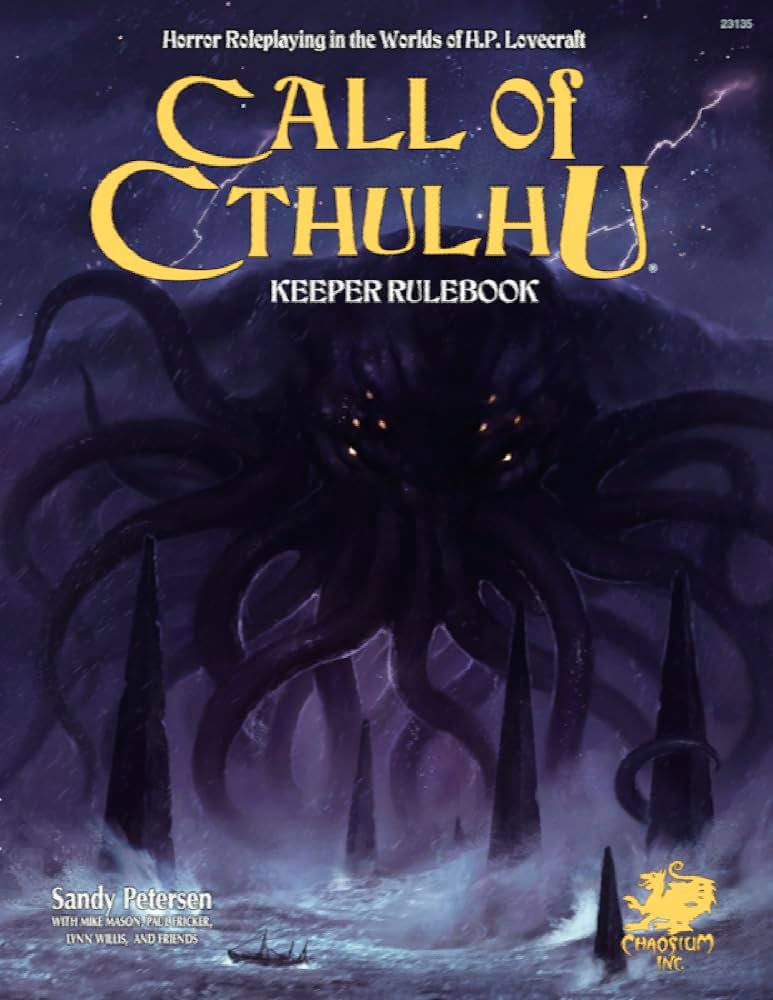
In Call of Cthulhu, luck acts as an attribute rolled during character creation, along with the conventional statistics of Strength, Intelligence, etc. This attribute is used in luck rolls where actions that are entirely based on random chance are rolled with luck (an example that the book gives is hailing a taxi during a busy day). This aspect is shared by most systems that position Luck as a conventional statistic, where luck rolls are rolls made in situations governed entirely by random factors, such as gambling.
Call of Cthulhu also includes an optional rule that I use in my games: if a player fails any roll, they can decrease their luck stat to increase their roll by the same amount, potentially turning a failed roll into a success. I like this mechanic because it provides an interesting narrative beat: if a character almost succeeds, the little bit of luck they have can push them over the edge. It also contributes to the general trajectory of Call of Cthulhu characters, where your character, over time, becomes less and less lucky as they become less sane.
Call of Cthulhu gives us two important design lessons in designing a luck mechanic: it demonstrates how luck can be treated similarly to other attributes, and shows how luck can be a resource that characters spend over time, which can run out.
Case 2: Fallout
Originally, the video game Fallout was based on a roleplaying game, meaning that it lends itself well to TTRPG adaptations. As one of Fallout’s core S.P.E.C.I.A.L. attributes is Luck, I was interested in what Fallout-themed TTRPGs have done with the mechanic. First, I turned to Modiphius’ 2d20 Fallout TTRPG and was not disappointed.
In Modiphius’ Fallout roleplaying game, Luck is one of your core attributes, but it is never used to make skill tests like other attributes. It is instead used to determine the outcomes of random events (similarly to Call of Cthulhu), and it more importantly determines the amount of skill points a character receives. These skill points can be spent to:
- Create a twist of fate in the players’ favour (finding the right kind of ammunition, guessing a password, etc)
- Can use Luck in place of another attribute to complete a skill test
- Circumvent the regular initiative order and act before anyone else
- Reroll dice
While the pool of luck points that each character gains at the beginning of a quest is relatively limited, this is still a very broad scope of Luck usage, elevating the importance of luck as an attribute in the game considerably. Here, making an incredibly lucky character is a valid strategy as luck can replace other statistics in certain situations. This approach also drives the idea of luck as a resource as using your luck points imposes no penalties. From a mechanical perspective, you are losing out if you are not using all of your luck points before the next restock, which cheapens the feel of the luck system. This ironically takes away risk from the luck mechanic.
Case 3: Tales From Elsewhere
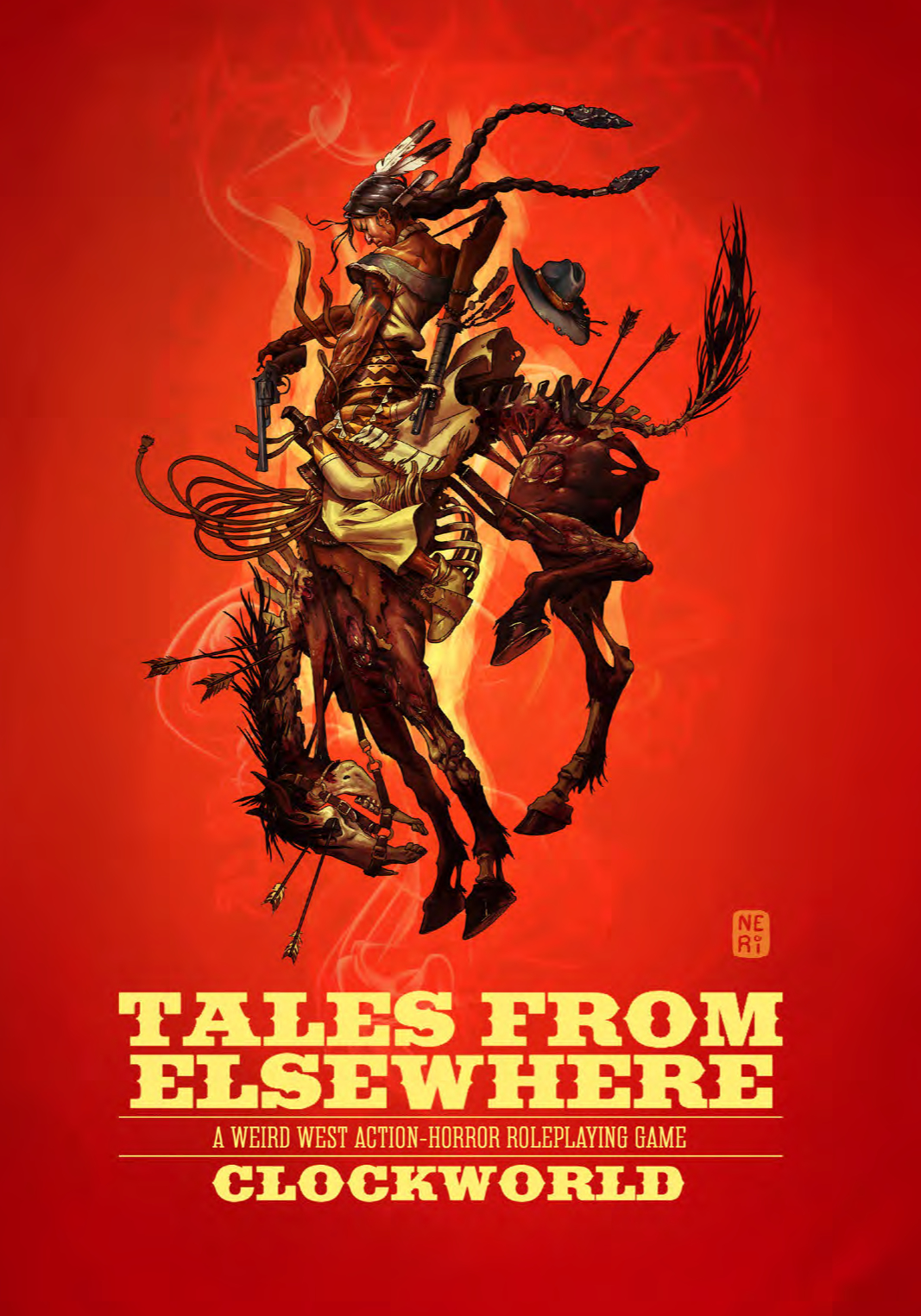
While doing research for this article, I stumbled upon the Steampunk Western TTRPG Tales From Elsewhere: Clockworld. Here, luck acts as another “meta-currency.” You can hold up to three luck points at a time, and you can spend them to reroll a skill check or to change the story in your favour in some way (having retroactively remembered to pack a crucial good, etc.). These benefits of spending luck points are ordinary, but they work elegantly.
The interesting aspect of Tales From Elsewhere’s Luck system is the way players gain luck points. Instead of receiving a dwindling reserve of luck points at the beginning of a session, players gain luck points during the session. This happens when a character receives a lethal injury or a player uses both of their actions on their turn to roleplay their injuries or backstory. Both of these avenues to gain luck points serve important purposes:
- Gaining luck by receiving lethal injuries softens the hard edges of the system. Gaining a lethal injury in Tales From Elsewhere puts a character very close to death, and two unlucky rolls in the right circumstances is enough to destroy a character that a player put a lot of work into. Giving a luck point to a character when they take a lethal injury mitigates the effects of unfair rolls, while still keeping the tension high.
- Gaining luck by expending both of your actions now forces players to think tactically about what they are doing in combat and out of it, as it stops players from operating on autopilot and simply choosing to bash a foe every turn. Not only this, but it incentivizes players to think creatively and think about their own character and their current state. Instead of simply powergaming their way to defeating a foe by robotically attacking every turn, a player stops and considers how the character they are playing would react to their current circumstances.
Designing Luck
All of these games use luck in different ways, and contribute novel ideas to the role a luck attribute can play in a game. Even so, they all share one thing in common that I believe helps to undermine the fuzzy feeling of luck: the players can directly track the amount of luck they have left. In each one of these systems, luck is tracked by a number on a character sheet. This has benefits, of course. It allows players to think strategically about where they are using luck and gives them interesting tactical options. But I believe that luck fundamentally shouldn’t be something you can always rely on. How then to incorporate the possibility of building a character around luck?
After taking time to muse over this question, I have settled on the idea of hiding a player’s luck stat from them. In this system, a player would report their luck stat to the GM at the beginning of a session, and not be able to view it during a session. At the end of a session, a player’s luck value resets to its original value.
For the sake of this design exercise, let’s say that every attribute in this TTRPG is a percentile, similar to Call of Cthulhu. Success on a roll means rolling a hundred-sided die and trying to roll under a statistic. Luck is a similar statistic, between 0 and 99.
A player could use their luck in two ways: they could either substitute luck for another skill during a roll, or they could use it to alter the story in some way, similar to Tales From Elsewhere.
- If a player uses their luck stat to alter the story, a GM would roll against the player’s remaining luck, telling them if they succeed. Whether this roll succeeds or fails, the player’s luck stat decreases by 1d10, or up to 3d10 if the story alteration is highly consequential.
- If a player substitutes their luck for another attribute, the dungeon master rolls their roll instead, and narrates the consequences.
In addition, a player’s luck stat is still used to determine completely random events such as gambling, hailing a taxi, or guns jamming.
This luck system seeks to maintain the idea of a strategic usage of luck, as players will have a rough idea of what their luck stat looks like during the beginning and end of the game, informed by their failure-to-success ratio as they use their luck stat. However, it guarantees that a player will never be able to fully know whether their luck will hold out, and that putting their faith in their character’s affinity with random chance can always end in failure. Narratively, this feeds into the archetype of a bold, reckless daredevil with a lucky streak, as players will actually be taking risks that may not end too well for them, instead of simply calculating their remaining reservoir of luck. Having a hidden luck stat also plays to characters who have not invested greatly in luck, as their victories with luck will feel like godsends instead of a simple probabilistic calculation.
While I enjoy Tales From Elsewhere’s choice to put gaining luck into a player’s hands, I don’t think it fits into this hidden luck system. If a player increases their luck stat while not knowing whether their luck stat is high enough for that to make a difference, it could cause frustration and a cheapening of a player’s choices.
Ultimately, luck in TTRPGs may seem like a silly mechanic that gamifies random chance, but it exhibits a fundamental ability of TTRPGs to support effusive narrative tropes with concrete rules that allow players to live out the epic moments and charming quirks of traditional media in a way that feels natural and unscripted.